Source: Shenzhen University Views: 181 Published: July 2, 2026, 14:30:53
Pooling Wisdom in the Greater Bay Area · Envisioning the Future of Education
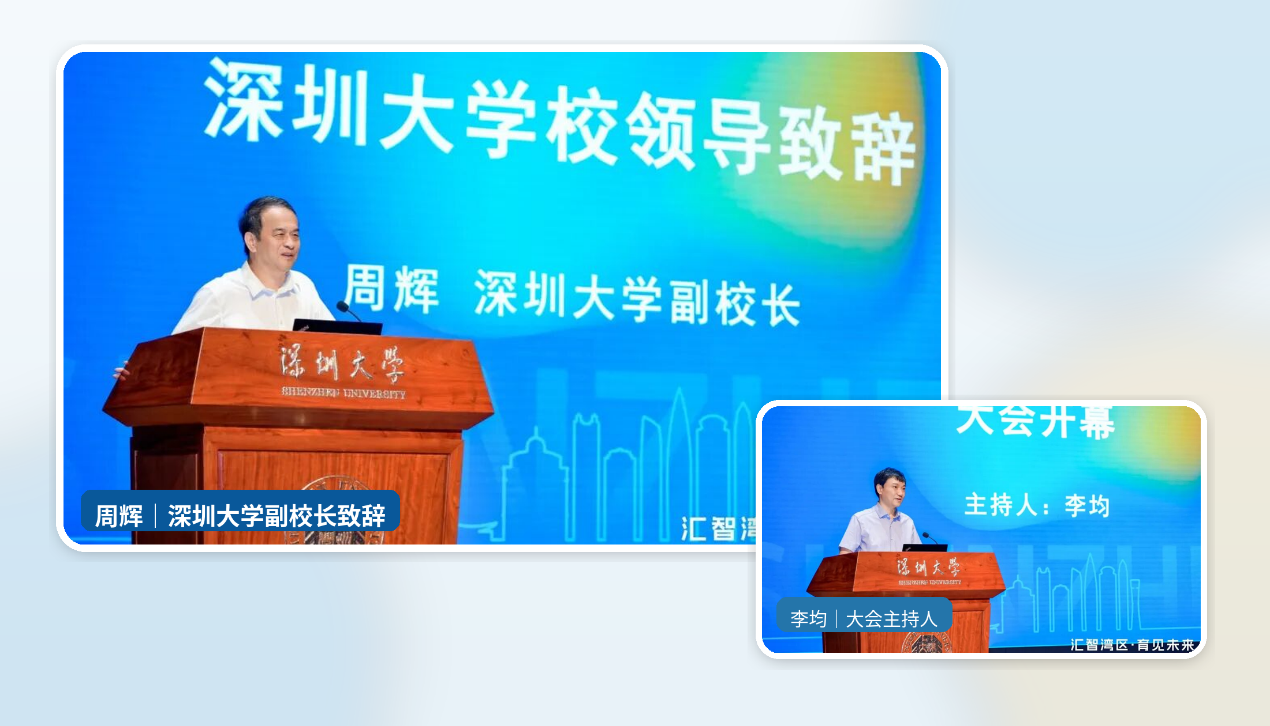
Professor Zhou Hui, Vice President of Shenzhen University, delivered a speech at the opening ceremony; Li Jun, Executive Dean of the Faculty of Education, Shenzhen University, presided over the ceremony.
Conference Overview
On June 27, 2026, the Inaugural 2026 Greater Bay Area Doctoral Student Academic Conference on Collaborative Innovation in Education was held at the International Conference Hall of Shenzhen University. The conference was organized by the Faculty of Education, Shenzhen University; hosted by the Center for Global Education Innovation and Leadership Development, Shenzhen University, the Institute of Education, Shenzhen University, and the Bay Area Institute of Education, Shenzhen University; and co-hosted by the School of Educational Sciences, South China Normal University; the School of Education, Guangzhou University; the Faculty of Education, The Chinese University of Hong Kong; the Faculty of Education, University of Macau; the Faculty of Education, City University of Macau; and the University International College, Macau University of Science and Technology. The conference also received support from China Higher Education, Modern Distance Education Research, University Education Science, Higher Education Exploration, Educational Science Research, Global Education Review, and other academic journals.
Nearly 200 experts and scholars, journal representatives, doctoral students, and young scholars from universities across the Guangdong-Hong Kong-Macao Greater Bay Area (GBA), as well as representatives of the co-hosting institutions and supporting journals, attended the conference.
Professor Zhou Hui, Vice President of Shenzhen University, attended the opening ceremony and delivered a speech. Li Jun, Executive Dean of the Faculty of Education and conference moderator, presided over the ceremony. On behalf of the University, Professor Zhou extended a warm welcome to all participants. He noted that the GBA serves as an important platform for China’s efforts to build a strong country in education and a major hub for talent and innovation. He encouraged young scholars to take root in the GBA while embracing a global perspective and to contribute their academic expertise to addressing major issues in educational reform and social development.
Keynote Sessions
The keynote sessions were moderated by Professor Zhao Mingren, Vice Dean of the Faculty of Education; Professor Liu Guoyan, Dean of the School of Education; and Associate Professor Kong Xiangyuan, Head of the Department of Education, all from Shenzhen University. Professor Zhou Hongyu, Dean of the National Institute of Educational Governance and Dean of the Yangtze Institute for Education at Central China Normal University, delivered a keynote presentation on the development of core competencies among doctoral students in the new era. He emphasized that doctoral students should cultivate their character, enhance their capabilities, and assume responsibility through shared learning, collective action, and self-cultivation. Professor Zhang Zhiqiang, Dean of the Faculty of Education and Director of the Centre for University-School Partnerships at The Chinese University of Hong Kong, drew on Hong Kong’s experience in cultivating top-tier talent to share insights into the development of world-class innovation and education ecosystems. Professor Li Shengbing, Dean of the School of Educational Sciences and Director of the Centre for Hong Kong and Macao Studies at South China Normal University, focused on the reconstruction of classroom relationships in the era of artificial intelligence. He explored a new teaching model featuring collaborative interaction among teachers, intelligent technologies, and students. Professor Fan Lianghuo, Dean of the Faculty of Education and Director of the Centre for STEM and AI Education at the University of Macau, approached the discussion from the perspective of teachers’ professional knowledge in mathematics education and examined the relationship among subject-matter knowledge, pedagogical knowledge, and teachers’ professional development. Professor Du Yuhong, Dean of the School for Future Education and Dean of Leyu Academy at Beijing Normal University, examined the relationship among technological advancement, institutional change, and educational innovation, and analyzed the deeper driving forces shaping educational development. Professor Li Shuying, Director of the Center for Global Education Innovation and Leadership Development at Shenzhen University and Chair of the conference, reflected on the fundamental mission of universities and the direction of high-quality development in the context of the “Shuangyou” (Double Excellence) Initiative. He also shared his reflections on the reconstruction of university values and innovation in practice.
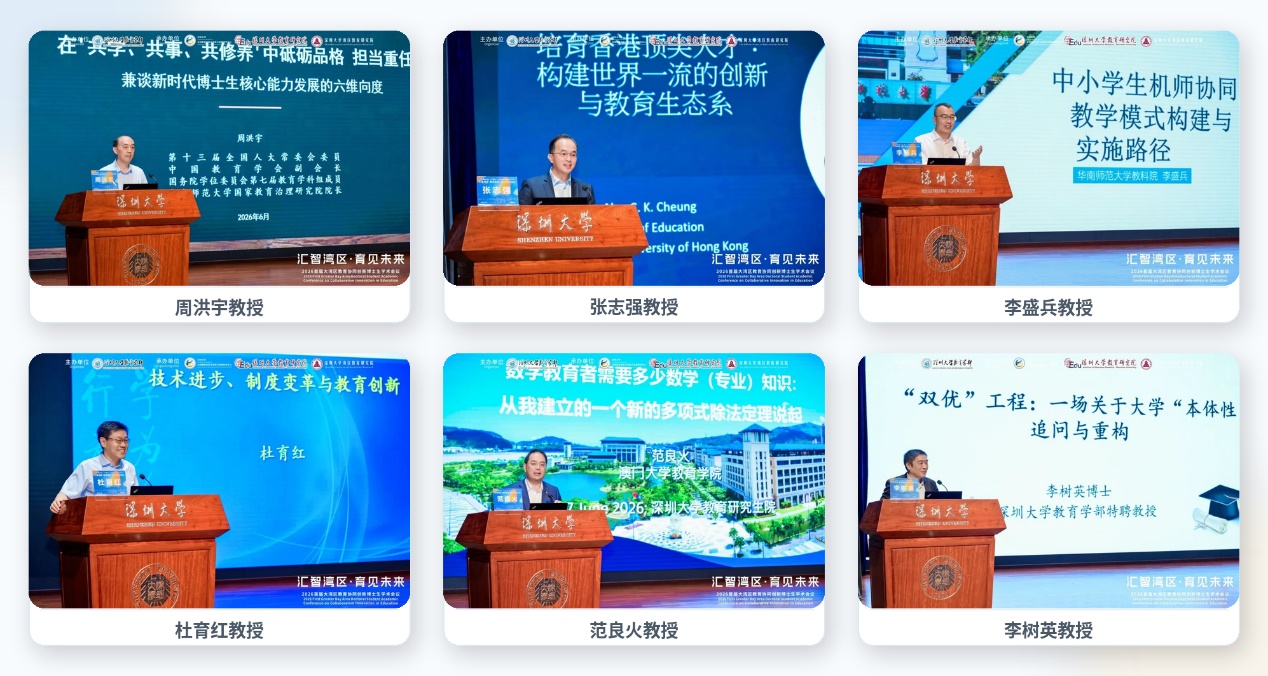
The Keynote Session
Young Scholars’ Forum and Journal Editors’ Dialogue
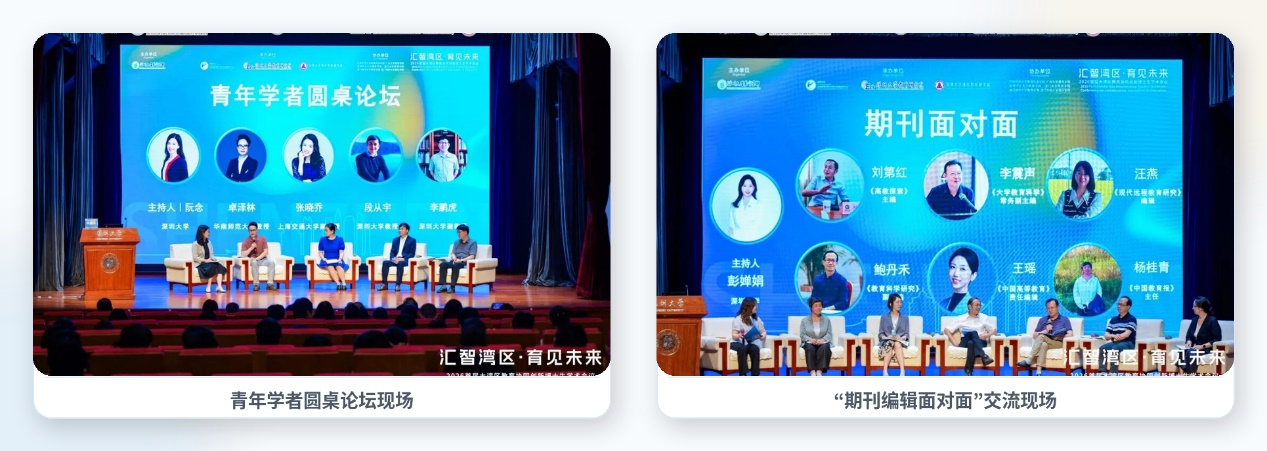
The conference also featured a Young Scholars’ Roundtable, eight thematic parallel sessions, and a “Meet the Journal Editors” session. The Young Scholars’ Roundtable focused on doctoral student development, academic training, research topic selection, and career development. Professor Zhuo Zelin of South China Normal University, Associate Professor Zhang Xiaoqiao of Shanghai Jiao Tong University, Professor Duan Congyu of Shenzhen University, and Associate Professor Li Penghu of Shenzhen University shared reflections and insights drawn from their own academic journeys and research experience. They encouraged doctoral students to establish stable research directions through a strong awareness of research questions, rigorous methodological training, and sustained academic development.
The parallel sessions covered a wide range of topics, including high-quality educational development and the cultivation of top-tier innovative talent; innovative pathways and ethical governance for leveraging digital and intelligent technologies to empower education; educational innovation and leadership development; optimization of educational resource allocation amid demographic change; educational policy reform and educational equity in the GBA under the strategy of building a strong country in education; and deep integration of industry and education and collaborative institutional innovation in the GBA. Doctoral students and young scholars from universities across the Chinese mainland, Hong Kong, and Macao presented and discussed their research findings. Their presentations demonstrated the commitment of young education researchers to addressing contemporary issues, responding to educational practice, and exploring new avenues for academic innovation.
At the “Meet the Journal Editors” session, guests and editorial representatives from China Education Daily, Higher Education Exploration, University Education Science, China Higher Education, Modern Distance Education Research, and Educational Science Research engaged in in-depth discussions with young scholars on topics including refining research questions, academic writing standards, enhancing scholarly expression, pathways for disseminating research findings, and journal submission requirements. The session provided valuable support for doctoral students and young scholars seeking to strengthen their academic capabilities, broaden their scholarly perspectives, and produce high-quality research.
Conclusion and Outlook
At the closing ceremony, the conference recognized outstanding presentations. In his concluding remarks, Professor Li Shuying stated that the conference was designed to provide young scholars and doctoral students with a focused and open platform for academic exchange, enabling them to concentrate on research questions, spark new ideas through dialogue, and build consensus through scholarly engagement. He noted that this inaugural conference marked only the beginning. The event will continue to be held in the years ahead, with the aim of developing a long-term and sustainable academic platform and flagship brand for doctoral students in educational innovation across the GBA and throughout China.
The successful conference further strengthened academic ties between the Faculty of Education, Shenzhen University and universities and educational research institutions across the GBA, while promoting in-depth exchanges among young scholars on the integrated development of education, science and technology, and talent.
Looking ahead, the Faculty of Education, Shenzhen University will continue to build on the strengths of the GBA while embracing a global perspective. It will actively promote the coordinated development of innovation in educational theory and practice and will contribute greater expertise and intellectual support to building a strong country in education and advancing high-quality development in the GBA.
Written by: Zhou Hao

 Links
Links Contact us